Institut Le Rosey 2026: a complete advisor guide to the world's most expensive boarding school
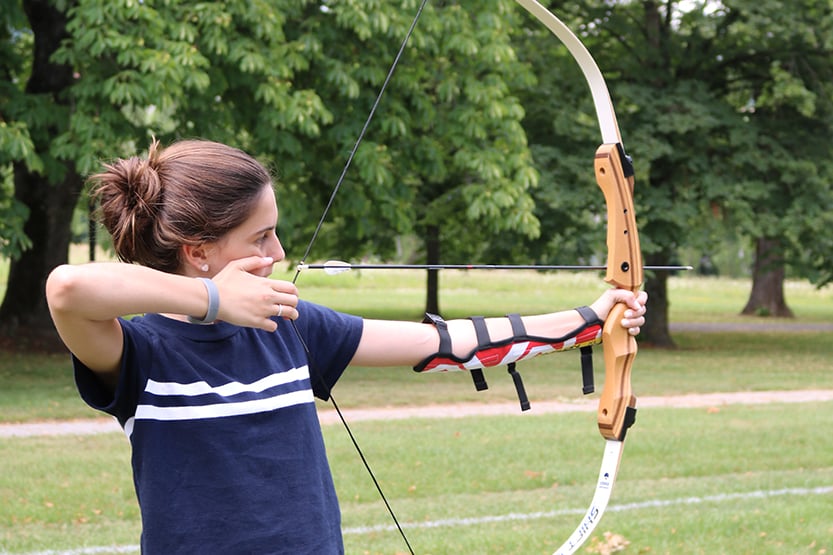
Le Rosey is widely cited as the world's most expensive school — but the school's distinctive identity goes far beyond price. Two seasonal campuses, 67 nationalities, IB + French Bac in parallel, and a deeply specific cohort culture. Here's the honest 2026 guide.
Institut Le Rosey is the boarding school most families ask about by name and the school most often misunderstood from the outside. The widely-cited reputation — the world's most expensive school, the alumni roster of royalty and finance principals, the dual campus that relocates to Gstaad in winter — captures the surface accurately enough. What it misses is what daily life is actually like for a 14-year-old at Le Rosey, what the academic culture demands, who actually fits the cohort, and where the school's strengths and limitations sit relative to the broader Swiss alpine and global boarding alternatives.
We advise families considering Le Rosey every admissions cycle. The decision is unlike most other boarding choices — partly because the price point removes it from cost-comparison frameworks that work for other schools, partly because the school's identity is built around very specific cultural and pedagogical commitments, and partly because the very limited cohort (about 420 students total) means availability and fit matter more than at most peer institutions. This guide is what we'd say to a family in a private call about Le Rosey, written plainly.
Read top to bottom if you're early in the process. Skip to specific sections if you're already engaging with the school's admissions team. The right answer is not always Le Rosey, even for families who can afford it — the school is structurally an excellent fit for some children and structurally not the right environment for others.
The 60-second profile
Institut Le Rosey was founded in 1880 in Rolle on the shores of Lake Geneva, Vaud, Switzerland. About 420 students aged 8-18 from 67 nationalities, all boarding, fully co-educational. The school operates two campuses on a seasonal schedule: the historic main campus in Rolle (autumn term September-December, spring term April-June) and a winter campus in Gstaad (January-March), where the entire school physically relocates to a Bernese Oberland alpine resort village. The school's IB Diploma cohort is the academic centre at sixth form, with the French Baccalauréat available as an alternative credential. Bilingual French-English instruction from primary level. Olympic-grade sport facilities and arts infrastructure. Founder family the Carnal family operate the school; Christophe Gudin is the current Director General.
Publicly-reported all-in cost: in the CHF 165,000-185,000+ range per year for senior boarding (USD 185,000-205,000+) including the Gstaad relocation, ski programme, and ancillaries. Le Rosey does not publish single transparent fee figures on its website; this is consistent with the cohort's price-insensitivity and the school's preference to engage on fees during direct admissions conversations. We always recommend asking admissions for the full current-year fee schedule including the Gstaad term and additional costs at the same time you submit interest.
Round Square member? No — Le Rosey is not part of the Round Square network (Aiglon, Salem, and Beau Soleil are). The Round Square distinction matters for families specifically attracted to the Hahn pedagogical tradition.
The two-campus seasonal model: what it actually means
Le Rosey's two-campus model is the school's most distinctive structural feature and the one most commonly misunderstood. From January through March, the entire school physically relocates to Gstaad in the Bernese Oberland — pupils, faculty, boarding staff, academic programmes, food services, the chapel, the orchestra, even the school's horses move to the Gstaad campus for the duration of the winter term. This is not an alpine ski week or a short residential trip — it is the school physically operating in two locations across the academic year.
The pedagogical and cultural intent is real: the Rolle campus shapes the lakeside French-speaking Swiss culture (academic terms, water sport, formal arts, the Carnal family's chateau context); the Gstaad campus shapes the alpine winter culture (daily skiing built into the curriculum, a different geographic and social rhythm, exposure to a different part of Swiss life). Pupils experience two genuinely distinct boarding environments across the academic year — for most graduates this is one of the defining experiences and a unique feature among major boarding schools globally.
Practical implication: families considering Le Rosey should understand that boarding life genuinely happens in two places. There is no day-pupil option — boarding is structural to the school's model. Weekend exit and holiday arrangements need to account for the Gstaad campus being the school's address from January to March. For a Türkiye-based family, this means Istanbul-Zurich flights and Zurich-Gstaad transfers (typically 2 hours by train or car) replace the Geneva-airport routing of the autumn/spring terms.
Curriculum: IB Diploma alongside French Baccalauréat
Le Rosey runs the IB Middle Years Programme (MYP) at age 11-16 and the IB Diploma Programme at age 16-18, alongside the French Baccalauréat as an alternative sixth-form credential. The dual-credential structure is consistent with the school's bilingual French-English instruction from primary level and the genuinely Francophone-Anglophone-mixed cohort. For families targeting French-speaking universities (Sciences Po, HEC Paris, École Polytechnique), the French Bac pathway at Le Rosey is structurally aligned. For Anglosphere university targets (US, UK, Australia), the IB Diploma is the primary pathway.
Le Rosey's IB cohort has historically had strong average outcomes (low 40s out of 45 published in some recent years), reflecting both the school's selective intake and the highly resourced academic support structure. Class sizes are typically 10-12 in IB subjects — small relative even to peer Swiss alpine schools. Theory of Knowledge and Extended Essay supervision are well-developed. The French Bac cohort is smaller but well-supported.
Below sixth form, the curriculum is bilingual French-English with subjects taught in both languages depending on subject, year, and student profile. Mathematics is typically taught in English; humanities subjects often in French. Students entering Le Rosey without strong French at any age below 14 will need to develop working French during the school's structured language programme — this is rigorous but achievable for academically motivated children.
Cohort and culture
Le Rosey's cohort is the school's most distinctive social feature and the one families should understand most carefully before applying. The school's 420 students come from 67 nationalities, but the cohort's social composition reflects a very specific global slice: senior corporate finance, family-business principals from emerging-market countries, European nobility and contemporary European elite families, royalty (current and former), and a small academic and creative-arts segment. This is not representative of the broader 'international school' market — Le Rosey serves the highest-net-worth global family segment with an intentional and well-curated cohort.
Pedagogically and pastorally, the school works hard to integrate this cohort into a functional community rather than allowing wealth-display dynamics to dominate. Uniform requirements, structured academic and sports schedules, common dining halls, and the residential boarding structure all reduce the visible class signalling that would otherwise emerge in a fee-privileged cohort. The school's culture explicitly emphasises civility, multilingualism, and a particular form of well-mannered international sophistication.
Practical implication: families considering Le Rosey should think carefully about cohort fit for their child specifically. Children who would thrive in the polished social environment, who have or will develop multilingual confidence, and whose parents have professional or family backgrounds that align with the cohort tend to integrate naturally. Children whose family background is less aligned, who would prefer a more academically meritocratic atmosphere, or who would benefit from the more rugged Round Square framing of Aiglon may find Le Rosey's social environment less aligned with their development.
Admissions: very limited cohort, genuine assessment
Le Rosey's admissions process is more structured than the public picture suggests. The school accepts approximately 100 new students each year across all entry years, with most entering at Class 6 (age 11), Class 8 (age 13) and Class 11 (DP1, age 16). Applications require: school transcripts (last 2-3 years), teacher recommendations, English and French language assessments (for non-native speakers), a comprehensive family interview, an in-person assessment day at the school, and supporting documents about the family's background and circumstances.
The assessment day matters. The school looks for academically capable students who will fit the cohort's social and behavioural expectations alongside the linguistic and pedagogical demands. Strong academic record is necessary but not sufficient. The interview process surfaces fit with the school's culture — pupils who are visibly polished, multilingually confident, and culturally engaged tend to assess well. Pupils who are academically strong but socially less ready for the cohort may not receive offers despite strong applications.
Realistic timeline: register interest by age 9-10 for the Class 6 (age 11) prime entry. The school can sometimes accommodate later applications for non-prime year groups but Class 6, Class 8, and Class 11 entry tend to fill 12-18 months ahead. For families targeting September 2026 entry, the 2025 application cycle is now closed at most year groups; September 2027 is the active cycle for Class 6 and Class 8 entry.
Cost: what's actually included and what isn't
Le Rosey's pricing is widely cited but not transparently published. The publicly-reported tuition + boarding figure for 2025-26 is approximately CHF 130,000-140,000 per year, but this is just the starting point. Additional charges include the Gstaad campus relocation costs, the ski programme (ski instruction, lift passes, equipment, alpine sports), the school's organised cultural trips and weekend programming, optional summer programmes, technology and books, uniform requirements (the school has specific outfitters), medical insurance for non-Swiss residents, and travel home for exeats and holidays.
The all-in for an international family at Le Rosey typically lands in the CHF 165,000-185,000+ range per year (USD 185,000-205,000+ at January 2026 exchange rates), making Le Rosey the most expensive major boarding school globally by a clear margin. This is meaningfully above Aiglon (CHF 160-185k all-in), Beau Soleil (CHF 175-185k all-in), and other Swiss alpine alternatives. Compared to UK boarding (£75-90k all-in / USD 95-115k) or US boarding (USD 95-110k all-in), Le Rosey is approximately 1.8-2.2x the cost.
Practical guidance: ask Le Rosey admissions for a complete written fee schedule covering the entire academic year (both Rolle and Gstaad terms) before signing the enrolment contract. Include all line items — registration fee, refundable deposit, term fees, ski programme, summer programme, technology fee, books and uniform allowance. Le Rosey does not offer significant need-based financial aid; the school's pricing reflects its positioning as a top-tier private institution rather than a means-tested boarding option.
Sport, arts, and the extracurricular ecosystem
Le Rosey's extracurricular infrastructure is genuinely exceptional and a defining part of the school's value proposition. The Rolle campus includes an Olympic-standard sailing centre on Lake Geneva, indoor and outdoor tennis, multiple sports fields, an indoor swimming pool, a riding stable, a fully-equipped fitness centre, and the Paul & Henri Carnal Hall (a 900-seat performing arts centre that hosts international musicians, theatre productions and the school's own concert series). The Gstaad winter campus integrates with the Gstaad-Saanenland ski domain — pupils ski 3-4 times per week during the winter term as a structured part of the curriculum.
Sport at Le Rosey is taken seriously. Many graduates compete at international or Olympic levels in sailing, equestrian, skiing, tennis, and other sports the school supports. The school has historically produced Olympic athletes, particularly in sailing and skiing. For a sporting-talented child, Le Rosey offers training infrastructure and competition exposure that rivals dedicated sports academies — without sacrificing academic rigour.
Arts at Le Rosey similarly operate at a serious level. The Carnal Hall hosts named international performers (the school's connections give pupils access to world-class artistic mentorship that few other boarding schools can match). The visual arts and music programmes are well-resourced. For arts-strong students, the school offers genuine pathway support into music conservatoires, art schools, and creative-arts university programmes alongside the standard IB or French Bac academic track.
University placement
Le Rosey's graduates typically place to a mix of top UK universities (Oxford, Cambridge, Imperial, LSE, UCL, King's College, St Andrews), top US selective universities (Ivy League, MIT, Stanford, Chicago, Northwestern, Georgetown, top liberal arts colleges), top European universities (ETH Zurich, EPFL, Sciences Po, HEC Paris, Bocconi), and increasingly Asian institutions (NUS, HKU, Tsinghua). The school's college counselling office is well-resourced with deep relationships at admissions offices internationally.
The French Bac cohort at Le Rosey produces strong outcomes specifically for French-speaking universities and grandes écoles — Sciences Po, HEC Paris, ESSEC, École Polytechnique are regular destinations alongside the more international IB Diploma pathway. For families whose child is multilingual French-English and considering both Francophone and Anglophone universities, Le Rosey's dual-credential structure is structurally aligned.
Practical filter: Le Rosey is not academically superior to peer Tier 1 boarding schools at the university-placement level. Aiglon, Beau Soleil, Eton, Harrow, Westminster all produce similar university outcomes at the top end. What Le Rosey adds is the specific cohort, the seasonal-campus experience, and the extracurricular ecosystem rather than measurable academic outperformance over peers.
Who Le Rosey is the right call for
We typically recommend Le Rosey when the family's profile aligns naturally with the cohort (senior corporate, European or global family-business, royalty, finance principal), when the child has or will develop multilingual confidence (French-English bilingualism is structural to the school), when the family genuinely values the seasonal two-campus model as a feature rather than a logistical complication, and when the cost is not the primary decision factor. Strong fit for families targeting either French or international universities (the dual credential is structurally useful), for sporting-talented or arts-strong children (the extracurricular infrastructure is genuinely exceptional), and for adolescents who would thrive in a polished, multilingual, internationally-connected cohort environment.
Less of a fit for families specifically seeking the Kurt Hahn / Round Square expedition pedagogy (Aiglon is purpose-built for this), for families whose social profile would mean the child enters as a cultural outlier (children in this position can have difficult years before integrating), for families on tight budgets where Le Rosey's premium over Aiglon or Beau Soleil is material (those alternatives offer comparable academic quality at meaningfully lower price points), or for academic-prodigy children who would benefit more from a school selected purely on academic match (top UK day schools or Westminster-tier London options may serve such children better).
Le Rosey vs the alpine alternatives — quick framing
Many families considering Le Rosey also consider Aiglon (Chesières-Villars) and Beau Soleil (Villars-sur-Ollon). Our separate comparison articles cover these head-to-heads in detail (Aiglon vs Le Rosey 2026; Aiglon vs Beau Soleil 2026), but the quick framing is:
**Le Rosey vs Aiglon:** Le Rosey is larger (420 vs 400 students), more polished in cohort culture, more expensive (CHF 15-25k/year more all-in), has the seasonal two-campus model, and runs French Bac alongside IB. Aiglon runs only IB, adheres to Kurt Hahn / Round Square pedagogy with 4 annual Expeditions, has a multi-faith chapel programme as central school identity, and admits from age 9 (Le Rosey from age 8).
**Le Rosey vs Beau Soleil:** Le Rosey is larger (420 vs 300 students), has the unique seasonal two-campus model, is more polished and more expensive (CHF 10-20k/year more). Beau Soleil is smaller and more intimate, runs the same IB + French Bac credential structure, is a Round Square member, sits in a single Villars-sur-Ollon location year-round, and admits from age 11. Beau Soleil is a meaningful step down in cohort scale and price but with comparable academic outcomes.
Practical filter: if you want the largest, most polished, dual-campus alpine option and cost is not the binding constraint, Le Rosey. If you want the same alpine character at a lower price with similar academics, Beau Soleil. If you specifically want the Kurt Hahn Expedition pedagogy with single-credential IB focus, Aiglon.
Where to start
If Le Rosey is on your shortlist: register interest with the school's admissions office as early as practical for your child's age (age 9-10 for Class 6 entry; age 11-12 for Class 8 entry; age 14-15 for DP1 entry). The school's website includes contact details for the admissions team in Rolle; expect a response within 2-3 weeks during the active admissions cycle (September-March).
If you're weighing Le Rosey against Aiglon or Beau Soleil: our Aiglon vs Le Rosey 2026 and Aiglon vs Beau Soleil 2026 comparison articles cover the trade-offs in detail. The 30-minute advisor call with Kevin (London-based, handles UK + Switzerland boarding placements) is the right way to discuss whether your family profile and child specifically fit Le Rosey's cohort, or whether one of the alpine alternatives is the better structural fit.
If you're earlier in the process and want to see Le Rosey alongside the broader Swiss boarding landscape: our Swiss Boarding Deep Dive 2026 walks through the alpine character-tier, the Lake Geneva Anglo-elite tier, and the broader Swiss boarding market. Le Rosey sits in the Lake Geneva Anglo-elite tier alongside Brillantmont and Collège du Léman.
See how this article maps to your child's profile.
Run our 5-step AI Match — we'll factor in the trade-offs covered above.
Start AI MatchTalk to a senior education advisor.
AI helps you shortlist. Our advisors help your family decide — with a decade of admissions experience across UK, Switzerland, North America and Asia.