Aiglon vs Le Rosey 2026: an honest head-to-head from advisors
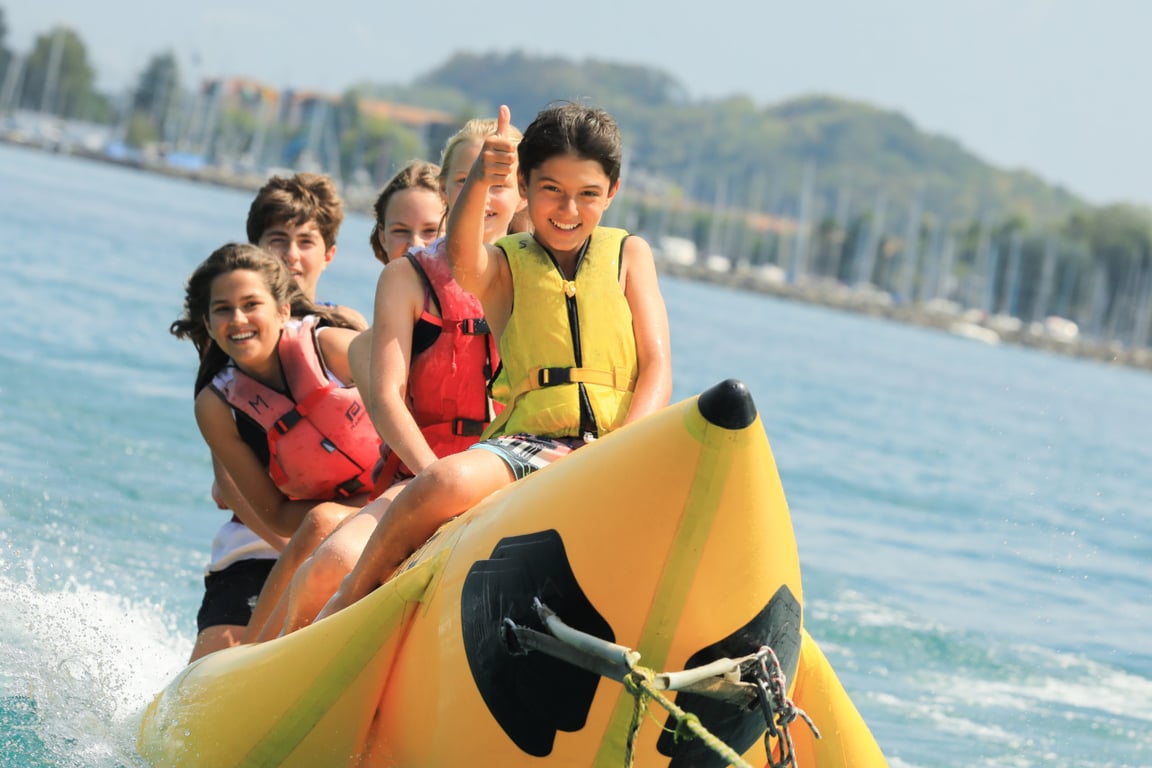
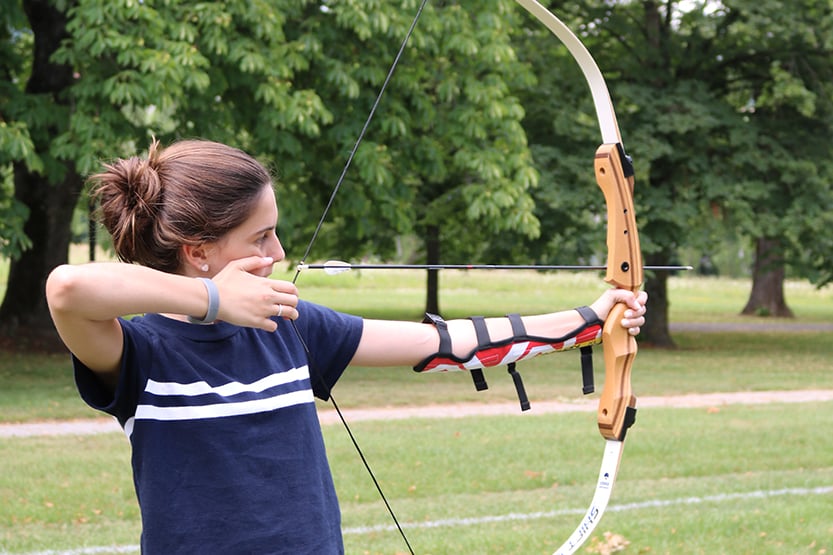
We advise families on both. Here's how Aiglon College and Institut Le Rosey actually differ on campus, curriculum, cost, and who each one is right for in 2026.
Most families researching Swiss boarding schools end up on the same two names within an afternoon: Aiglon College and Institut Le Rosey. The two schools sit fifteen kilometres apart on the map and a continent apart in feel — and the choice between them is one of the most consequential a family will make for a teenager's last six years before university.
We advise families considering both schools every term. The information online is uneven: Aiglon's site leans into expedition photography, Le Rosey's leans into prestige and the move to Gstaad. Neither tells you what life actually looks like on a Tuesday in November, or which child is likely to thrive at which school. This piece is our attempt at a fair, useful comparison — written with the same trade-offs we walk families through privately.
If you're already deep in the research, skip to the section that maps to your decision. If you're starting fresh, read top to bottom: the differences compound, and the right answer for your family is rarely either school's headline pitch.
The 60-second comparison
Aiglon College sits at 1,300 metres in the village of Villars-sur-Ollon, in the Vaud Alps. It was founded in 1949 by John Corlette on a Round Square philosophy of mind, body and spirit, and the alpine campus is built into that ethos: a Tuesday timetable might include morning meditation, IGCSE physics, an afternoon ski lesson and an expedition meeting before dinner. About 420 students from 50+ countries, 1:6 student-to-teacher ratio, IB Diploma plus IGCSE, tuition roughly USD 92,000 to 138,000 a year all-in.
Institut Le Rosey was founded in 1880 and has grown into what the school itself calls 'the school of kings' — though current leadership has consciously shifted away from that framing. Two campuses: a year-round chateau in Rolle on Lake Geneva, and a winter campus in Gstaad from January through March. Around 420 students, 1:5 ratio, IB Diploma and AP, fully bilingual French and English instruction, tuition around USD 145,000 a year — the highest of any boarding school in the world.
On paper, the two schools look similar in size and outcomes. The lived experience is profoundly different.
Campus and culture: alpine versus lakeside
Aiglon's identity is built on the mountain. Students hike, ski, climb and complete a graded expedition programme that culminates in a multi-day trek in the Pre-Alps. Houses are small (the school has nine), spread along the village, and house life is unusually formal by international standards: mind-body-spirit reflections at the start of each day, a uniform, and a culture of personal responsibility that families either find character-building or constraining.
Le Rosey's culture is shaped by its geography. The Rolle campus is a 28-hectare estate with its own concert hall and equestrian centre, on the lake; the Gstaad winter relocation is unique among boarding schools and is closer in feel to a high-altitude residential than a separate campus. Daily life is less monastic and more cosmopolitan: more weekend trips, more visiting speakers, more emphasis on cultural and diplomatic exposure.
Both schools are deeply international — Aiglon students come from over 50 nationalities, Le Rosey from over 60 — but the social dynamic differs. Aiglon families often describe the cohort as 'globally serious'; Le Rosey as 'globally connected'. Neither is better; they shape children differently.
Academics: IB plus British versus bilingual IB and AP
Aiglon teaches the British IGCSE through Year 11 and the IB Diploma in the final two years. Instruction is in English. The IB programme is rigorous and well-resourced, and the school's small class sizes (an average of 12) mean Diploma students get unusually individual attention through Extended Essays and Higher Level papers. University placement reflects this: 94% of Aiglon graduates land at top-100 global universities, with strong recent representation at Oxford, Cambridge, the LSE, ETH Zurich and the US Ivies.
Le Rosey's academic offer is structurally different. The school is genuinely bilingual: every student studies in both French and English, with a French-stream and an English-stream that converge on the IB or AP in the final years. For a family weighing French-speaking university options (HEC Paris, Sciences Po, EPFL), this matters considerably. Class sizes average 10. University placement is similar to Aiglon at 96%, but the destination mix tilts more toward continental Europe, the UK, and US liberal arts colleges than to STEM-heavy US research universities.
A practical filter we use with families: if your child is targeting MIT, Stanford or US engineering programmes, Aiglon's curriculum maps cleanly. If they're considering a Sciences Po or a French Grande École, Le Rosey's bilingual stream is genuinely difficult to replicate elsewhere.
Cost, fees and what is actually included
Aiglon's published full-board fee for 2025–26 is approximately CHF 122,000 for senior boarders, which translates to roughly USD 138,000 at the upper end. The figure includes tuition, full board, the standard expedition programme, and most extracurriculars. Ski passes, optional trips and uniform sit on top. Aiglon offers means-tested scholarships and a small number of merit awards.
Le Rosey publishes a single all-inclusive fee — currently CHF 130,000, around USD 145,000 — which covers everything: tuition, board, the move to Gstaad, sailing on the lake, equestrianism, and the school's famously varied weekend programme. The fee is the highest of any school in the world, and Le Rosey does not offer scholarships in the traditional sense; the school is explicit that its model depends on full-fee admissions.
For most families the difference is closer to USD 10,000 a year than the gap looks at first glance. The harder question is what you're actually buying. At Aiglon you're paying for an alpine residential education with a strong character-formation thesis. At Le Rosey you're paying for an unusually well-resourced cosmopolitan environment, the bilingual programme, and access to a network.
Admissions: how selective each school really is
Both schools describe themselves as highly selective; the data behind that label is different. Aiglon admits roughly one in three applicants in a typical year. The process is multi-stage: an academic application, school references, a CAT4 or equivalent assessment, and an in-person or video interview with a head of house. Strong students with a clear character story and an interest in the outdoors do well.
Le Rosey is meaningfully harder to predict. The school admits around one in five and weights interviews and family interviews heavily — a candid acknowledgement that the cohort effect is part of what families pay for. Academic credentials matter, but a child who interviews well, brings something to the bilingual environment, and whose family is comfortable with the social context will often outperform a stronger paper application without those signals.
If you are working with us as advisors: the lead time we recommend is 12 to 18 months for either school, and 18 to 24 for Le Rosey if your child is applying from outside French- or English-speaking schooling.
University placement and alumni networks
Headline university outcomes are close enough to be a wash: Aiglon reports 94% of graduates at top-100 global universities, Le Rosey 96%. The destination mix tells a more useful story.
Aiglon's recent classes have placed strongly into UK and US universities — Oxbridge, Imperial, US Ivies, Stanford, NYU Abu Dhabi — with a notable cluster of STEM and economics offers. The IB-only structure means students arrive with a writing-heavy academic profile that translates well to humanities-strong universities.
Le Rosey's mix is more continental: significant flow into HEC Paris, EPFL, ETH Zurich, the LSE, and US liberal arts colleges. Alumni include royalty, heads of state and prominent business families, and the alumni network is a tangible asset — but families should be honest with themselves about whether that's actually a deciding factor for their child or a story they want to tell others.
Day-to-day: outdoor expeditions versus sport and culture
This is where the two schools feel most different. Aiglon's expedition programme is core curriculum: every student in years 7 through 12 participates in graded expeditions, building from village walks to multi-day Alpine treks. Skiing is part of the weekly schedule from December to March. The school owns and runs its own ropes course, chapel and outdoor centre. For a child who needs altitude — literal and metaphorical — to thrive, Aiglon is hard to match.
Le Rosey's programme is broader and lower-intensity. The school has Olympic-standard sailing on Lake Geneva, an internal regatta calendar, equestrianism on its own grounds, and a winter sport programme in Gstaad that is closer to a development pathway than a recreational schedule. Cultural programming — visiting authors, conductors, and diplomats — runs throughout the year and is unusually serious. The school is also notable for its arts programme; the Paul & Henri Carnal Hall is a working concert venue.
A common rule of thumb we share with families: Aiglon shapes the body to shape the mind, Le Rosey shapes the network to shape the mind. Both work. The right one depends on the child.
Who Aiglon is the right call for
We typically recommend Aiglon when the child is genuinely outdoors-inclined — not just willing to ski, but energised by being on a mountain — and when the family values a structured, character-led residential experience. Aiglon also tends to be a strong fit for families targeting UK and US universities for STEM, where the IB plus IGCSE structure maps cleanly.
It is less of a fit for children who are not interested in expedition life, who would struggle with the formality of mind-body-spirit reflections and uniform, or whose academic profile leans heavily into bilingual French education the school doesn't offer at scale.
Who Le Rosey is the right call for
Le Rosey is the right answer when bilingualism is a genuine priority — for the family, for university plans, or for cultural identity reasons — and when the family is comfortable with the cosmopolitan social context the school operates in. It also tends to be a strong fit for children with serious cultural or musical interests, given the depth of the arts programme.
It is less of a fit for children who would feel out of place in a high-fee, high-network environment, families for whom scholarship support is necessary, or children whose primary motivation is an outdoor or expedition experience the alpine schools deliver more directly.
The advisor's take
Both schools are excellent. The mistake families make is treating them as alternatives in the same category — they are alternatives in different categories. If we had to compress our advice into a single sentence: choose Aiglon if you want the school to shape your child's relationship with effort and the natural world, and Le Rosey if you want the school to shape your child's relationship with people and culture. Most families know which one resonates within an hour of saying it out loud.
If neither captures it, both schools may be the wrong shortlist. Switzerland has a dozen credible boarding schools, and the next layer down — Beau Soleil, TASIS, Brillantmont, Leysin American School — solves problems Aiglon and Le Rosey don't, often at lower cost. We're happy to talk through that.
Frequently asked questions
- Is Le Rosey or Aiglon harder to get into?
- Le Rosey is more selective on paper — admitting about one in five applicants versus roughly one in three at Aiglon — but the schools weight different things. Aiglon emphasises academic profile, character references, and a clear story. Le Rosey weights interviews and family fit more heavily because cohort composition is part of the offer.
- Which school has better university placement?
- The headline numbers are close: Aiglon places 94% of graduates at top-100 global universities, Le Rosey 96%. The mix differs. Aiglon leans toward UK and US universities (Oxbridge, Stanford, the Ivies, Imperial). Le Rosey has a stronger continental European flow (HEC, Sciences Po, EPFL, ETH) alongside the LSE and US liberal arts colleges.
- How much does each school cost in 2026?
- Aiglon's senior full-board fee is approximately CHF 122,000 (~USD 138,000) for 2025–26, with extras such as ski passes and optional trips on top. Le Rosey publishes a single all-inclusive fee of around CHF 130,000 (~USD 145,000) that covers the move to Gstaad, sailing, equestrianism and weekend programming. Both schools update fees annually.
- Does Le Rosey offer scholarships?
- Le Rosey does not run a scholarship programme in the traditional sense — the school's model depends on full-fee admissions. Aiglon, by contrast, offers means-tested scholarships and a small number of merit awards. Families who need fee support should treat Aiglon as the more realistic of the two.
- Is the move to Gstaad disruptive academically?
- Le Rosey has run the seasonal relocation since 1916 and has unusually mature systems around it. Teaching, residential life and most extracurriculars move together for the January-to-March winter term, and academic continuity is strong. Some families and advisors do note a social dynamic shift in Gstaad — a different feel from the Rolle term — which is part of why families choose the school in the first place.
- Which school is better for IB?
- Both schools offer the IB Diploma to a high standard, with comparable average scores in the mid-30s to high-30s out of 45. Aiglon teaches in English with French taught as a second language; Le Rosey teaches in both French and English in parallel. The 'better' school is the one whose language and learning culture matches your child's profile, not the one with a marginally higher average score in any given year.
- Can my child do AP at Aiglon or IB at Le Rosey?
- Aiglon does not offer AP; the senior school is IB only. Le Rosey offers both IB and AP, and the choice is made in 11th grade based on university plans. Families targeting US universities sometimes use this to differentiate between the two schools.
- What ages do Aiglon and Le Rosey take?
- Aiglon takes students from age 9 to 18 (Years 5 to 13). Le Rosey takes students from age 7 to 18, although the early-years intake is small. Most families are deciding for the secondary years; both schools have well-developed transition programmes for international families joining in Year 7 or Year 9.
- Do both schools support visa and relocation for international families?
- Yes. Both schools have established processes for Swiss student permits, residential placement and onboarding for families relocating from outside the EU. Lead times are tight in either case — start the visa process the moment your offer is confirmed.
- How should I shortlist between Aiglon, Le Rosey and another Swiss school?
- We usually start with three filters: language plan (English-only versus bilingual French), the child's outdoor versus cultural orientation, and total annual budget including extras. Once those are honest, the shortlist often falls to two schools rather than ten. We're happy to walk through your specific situation through our AI Match or with an advisor call.
See how this article maps to your child's profile.
Run our 5-step AI Match — we'll factor in the trade-offs covered above.
Start AI MatchTalk to a senior education advisor.
AI helps you shortlist. Our advisors help your family decide — with a decade of admissions experience across UK, Switzerland, North America and Asia.