École Jeannine Manuel Paris 2026: a complete advisor guide to France's flagship bilingual school
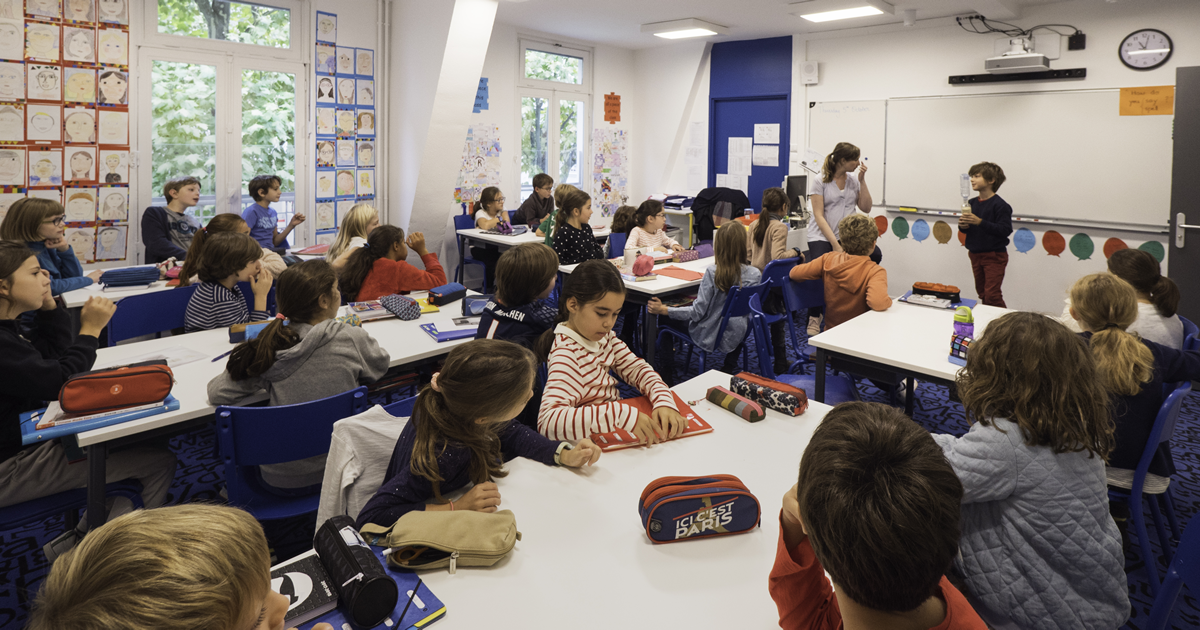
École Jeannine Manuel was France's first bilingual French-English co-ed school when founded in 1954 — and remains the bilingual flagship 70 years later. Three credentials at sixth form, sous-contrat fees, exceptional university outcomes. Here's the operational 2026 guide.
École Jeannine Manuel is France's flagship bilingual school and the school we recommend most often to Turkish families specifically considering a French-language education with international portability. Founded in 1954 by Jeannine Manuel as the first bilingual French-English co-educational school in France, it has operated as a sous-contrat institution with the French Ministry of Education for its French Baccalauréat stream since the foundation, while building one of Europe's largest non-Anglosphere IB Diploma cohorts alongside Cambridge IGCSE and the International Foundation Year for late international entrants.
The combination is distinctive. Few schools globally offer the French Baccalauréat, IB Diploma, and IGCSE in parallel at the same institution — and even fewer do it with the cost structure of a sous-contrat school (annual fees a fraction of fully-private internationals). For Turkish families targeting French-speaking universities (Sciences Po, HEC, the grandes écoles) or wanting genuine French-English bilingualism alongside international university optionality, Jeannine Manuel sits in a category essentially without peers.
We advise Turkish families considering Jeannine Manuel every admissions cycle. This guide walks through the school's distinctive structure, the three credential streams, the sous-contrat cost advantage, the admissions reality, and who specifically fits the cohort. Read top to bottom if you're early in the process. Skip to specific sections if you're already engaging with admissions.
The 60-second profile
École Jeannine Manuel was founded in 1954 by Jeannine Manuel in Paris (15th arrondissement, near the Eiffel Tower) as France's first bilingual French-English co-educational school. About 2,000 students aged 3-18 across the Paris main campus and a separate Lille campus, day only (no boarding option), fully co-educational from foundation. The student body draws from 70+ nationalities with strong Franco-international representation — children of French families wanting bilingual education, expatriate corporate families based in Paris, and families with diplomatic, banking, luxury, or tech industry profiles.
Three credentials operate in parallel at sixth form: the French Baccalauréat (the main track, sous-contrat with the French Ministry of Education), the IB Diploma Programme (a substantial parallel cohort with International Foundation Year support for late entrants), and Cambridge IGCSE at the upper-middle school years. The school is an IB World School and CIS-accredited. The Lille sister campus operates the same curricular structure with a smaller cohort.
Verified 2026-27 published annual fees (EUR): Primary EUR 10,260; Collège (middle school) EUR 11,185; Lycée (French Bac upper school) EUR 10,275; Foundation Year + IB DP1/DP2 EUR 24,865. Mandatory lunches and optional activities add roughly EUR 1,500-3,500 per year depending on programme. The sous-contrat status (state-subsidised) is the structural reason fees are 60-70% below comparable fully-private Paris international schools (ASP, BSP) and 80-85% below comparable Swiss day schools (Ecolint, ISL Lausanne) at equivalent year groups.
The Jeannine Manuel pedagogical model
The school's pedagogical identity rests on three structural commitments: bilingualism as a developmental practice (not just an instructional language), academic rigour calibrated to the French Baccalauréat standard, and a genuine multilingual cohort that makes the bilingual model live rather than performative.
Bilingualism at Jeannine Manuel is structurally deep. From age 3 in primary, pupils are taught in both French and English with specific subjects assigned to each language depending on year. By Year 5-6 most pupils are working academically in both languages without cognitive friction. By sixth form, the bilingual instruction is the substrate — French Bac students take some subjects in English, IB students take some subjects in French, and the language switching is part of normal academic life.
Academic rigour aligns to the French Baccalauréat tradition — the French Bac is a demanding national exit credential and Jeannine Manuel's pedagogy reflects this. Mathematics is taught seriously at every year level (French primary mathematics is notably more advanced than the equivalent UK or US year), humanities subjects emphasise essay-writing and structured argumentation, and the senior years (Première and Terminale) operate at a level that maps directly to the Bac demands.
The cohort culture is the third structural piece. Jeannine Manuel attracts Franco-international families who specifically value the bilingual model — meaning the cohort actually uses both languages socially and academically rather than defaulting to English (the failure mode of many notionally-bilingual international schools). This is more demanding for non-French-speaking entrants but is the reason the bilingualism develops authentically.
Three credentials: French Bac, IB Diploma, and IGCSE
Jeannine Manuel operates three credential streams in parallel at sixth form, with Cambridge IGCSE as the structural mid-school assessment for both French Bac and IB-track students.
**French Baccalauréat (the main track).** The standard French national exit credential, with Jeannine Manuel's sous-contrat status meaning the school follows the French national curriculum within its bilingual frame. Students take the Bac examinations at the end of Terminale (Grade 12) and receive a French Bac diploma identical to that issued by state lycées. This is the gateway credential for French universities, the prépa system, Sciences Po, HEC Paris, ESSEC, ESCP, École Polytechnique, the broader grandes écoles, and is widely accepted at UK universities (Oxbridge accepts French Bac with appropriate grades) and many European universities.
**IB Diploma Programme (parallel cohort).** Jeannine Manuel's IB Diploma stream is one of the most established in France. Students take the IB Diploma in parallel to the French Bac cohort, with Theory of Knowledge, Extended Essay, and CAS programme integrated into school life. The IB cohort is particularly suited to families targeting US or international universities — the IB Diploma is more portable than the French Bac for Anglosphere universities. Verified 2026-27 fee for the IB Diploma stream (DP1/DP2): EUR 24,865 per year — meaningfully above the French Bac track fee (EUR 10,275) because the IB Diploma stream operates without sous-contrat subsidy.
**International Foundation Year.** A bridging year designed for international students entering Jeannine Manuel at age 15-16 without strong French and wanting to progress to the IB Diploma. The Foundation Year provides intensive English and French academic support, IB MYP completion, and assessment for IB DP entry. For Turkish families considering Jeannine Manuel for sixth-form entry from a non-French-speaking background, the Foundation Year is the practical pathway.
**Cambridge IGCSE.** Used as the mid-school assessment qualification for both French Bac and IB-track students at Year 11. Provides Cambridge-recognised credentials at age 16 alongside the school's internal assessment.
Practical filter: French-speaking families targeting French universities choose the French Bac stream; international families targeting Anglosphere universities choose the IB Diploma; mixed families wanting optionality can decide between streams at end of Year 10 / start of Year 11.
The sous-contrat advantage explained
Jeannine Manuel's most distinctive structural feature is its sous contrat d'association status with the French Ministry of Education — and the cost advantage this creates. Understanding the sous-contrat framework is essential for relocating families.
Sous contrat schools partner with the French Ministry of Education to follow the French national curriculum within their own school setting. In exchange, the Ministry pays the salaries of the French Bac-stream teaching staff. This subsidy is meaningful — teaching salaries are typically 60-70% of a school's operating cost, so government coverage of this for the French Bac stream dramatically lowers the per-pupil fee the school needs to charge.
**The financial implication for families:** Jeannine Manuel's French Bac stream fees (Primary EUR 10,260; Lycée EUR 10,275 per year) are roughly 60-70% below comparable fully-private Paris international schools like the American School of Paris (USD 35-45k/year) or the British School of Paris (GBP 28-35k/year), and 80-85% below Swiss day-school equivalents (Ecolint senior years CHF 35-40k). For a Turkish family relocating to Paris with a child who can engage with the bilingual model, this represents EUR 60,000-120,000 in total savings across a five-year secondary school run compared to the fully-private alternatives.
The IB Diploma stream at Jeannine Manuel does not benefit from the sous-contrat subsidy (the IB curriculum is not the French national curriculum, so state subsidy doesn't apply). At EUR 24,865/year, the IB stream fee is higher than the French Bac track but still meaningfully below fully-private IB schools in Paris or Switzerland.
Cohort culture: Franco-international, multilingual, academically driven
The cohort culture at Jeannine Manuel is what distinguishes it from notionally-bilingual schools that don't quite live up to the framing. The school attracts families who specifically value the bilingual model — French families who want their children to develop genuine English fluency alongside the French Bac, international families with French connection or aspiration, dual-nationality families, and corporate-expat families based in Paris who want their children integrated with French culture rather than holed up in an Anglophone enclave school.
The lived experience is that French and English mix naturally in the schoolyard, classroom, and social interactions. Students who arrive without strong French develop functional French quickly because the cohort doesn't default to English the way Anglo-international schools do. Conversely, French students develop genuine English fluency rather than the polite-but-shallow English typical of French lycée graduates. By the senior years, most students are functionally bilingual at academic standard.
Academic drive is the second cohort feature. The French Baccalauréat is demanding, and the Jeannine Manuel community treats academics seriously. The hidden curriculum is that intellectual engagement is socially expected — students who are reading widely, debating ideas, and engaged with contemporary affairs are the cultural norm. This suits academically curious children well; it can be more challenging for children who would prefer a less intellectually engaged environment.
For Turkish families: the school has a meaningful Turkish-international presence (particularly families with French business connections or Turkish-French dual nationality) but the cohort is dominated by Franco-international Western European and Anglosphere students. Your child will integrate naturally if they engage with the bilingual model and the academic culture; less easily if they prefer the structured Anglo-international school environment of an ASP or BSP.
Cost reality: detailed
Verified 2026-27 published annual fees at Jeannine Manuel Paris (per child, EUR): Primary (Cours Préparatoire through Cours Moyen 2, ages 6-10) EUR 10,260; Collège (Sixième through Troisième, ages 11-14) EUR 11,185; Lycée French Bac (Seconde through Terminale, ages 15-17) EUR 10,275; Foundation Year EUR 24,865; IB DP1 and DP2 (sixth form IB stream) EUR 24,865 each year. The Lille sister campus operates similar fee structures with minor regional variation.
Additional mandatory charges: lunches (typically EUR 1,500-2,000/year), registration / enrolment fee (one-off, typically EUR 500-1,000), incidental fees for school trips and activities. Total annual all-in cost for a Turkish family at the French Bac track is typically EUR 12,000-14,000 per child including all charges. For the IB Diploma stream, all-in is typically EUR 27,000-29,000 per year per child.
**Comparative context for relocating Turkish families.** A child at Jeannine Manuel Paris French Bac stream for the full secondary years (Sixième through Terminale, 7 years): total tuition roughly EUR 75,000-85,000. The same child at the British School of Paris: roughly EUR 200,000-230,000. At American School of Paris: roughly EUR 230,000-260,000. At a Swiss IB day school for Grades 6-12: CHF 230,000-280,000 (USD 250,000-310,000). The Jeannine Manuel French Bac pathway represents 60-75% cost savings versus the fully-private alternatives for an academically equivalent (or, by many measures, academically superior) education.
Important caveat: the cost advantage applies specifically to the French Bac stream. If your child will be on the IB Diploma stream, the savings shrink considerably (Jeannine Manuel IB stream at EUR 24,865 is closer to ASP at EUR 35-45k — still cheaper but not by the dramatic margin).
Admissions reality
Jeannine Manuel's admissions process is structured around the French school year. Prime entry years are Cours Préparatoire (age 6, first year of primary), Sixième (age 11, first year of collège), Seconde (age 15, first year of lycée), and the Foundation Year (age 15-16, for international entrants). Mid-year entry to other year groups is available subject to year-group capacity.
The application typically requires: school transcripts from the last 2-3 years, French and English language proficiency assessment, teacher recommendations, a family interview, and where relevant a standardised assessment in mathematics and French (the school uses internal assessments rather than ISEB or similar). For Foundation Year entry specifically, the assessment emphasises the candidate's academic potential and willingness to develop French language alongside English, rather than current French fluency.
**Realistic capacity reality:** Jeannine Manuel has maintained active waiting lists at primary and middle-school entry points for many years. Sixième (age 11) entry specifically tends to fill 12-18 months ahead at the Paris campus. The Lille campus has slightly more flexible availability. Foundation Year entry and Lycée Seconde entry are typically less competitive than the lower-year entries.
**Application timeline for September 2026 entry:** applications typically close by January-February 2026 at most year groups, with offers issued in March-April. Foundation Year and lycée entry sometimes has rolling acceptance through June. For families targeting September 2027 entry, the active cycle starts in autumn 2026.
The interview matters. The school looks for families committed to the bilingual model and academic culture — not just families attracted to the cost advantage. Be prepared to discuss your child's language development plan, your university targets, and your engagement with the French educational tradition.
University placement
Jeannine Manuel's published university destinations are strong across French, UK, and US universities. The French Bac cohort places consistently to Sciences Po (Paris and regional campuses), HEC Paris, ESSEC, ESCP, the prépa system leading to Polytechnique / Centrale / Mines, the Sorbonne, and the broader French university system. The Bac sous-contrat track is structurally aligned with these destinations — the school's senior advisors know the French university admissions framework intimately.
The IB Diploma cohort places consistently to Oxford, Cambridge, Imperial, LSE, UCL (UK Russell Group), Yale, Princeton, Harvard, Columbia, MIT, Stanford (US Ivy + selective), Bocconi, ETH Zurich, McGill, Toronto, and the broader Anglosphere selective university landscape. The IB track's portability is the structural advantage for these destinations.
**For Turkish families:** Jeannine Manuel's combination is particularly powerful for families targeting either French grandes écoles (the Bac track) or Anglosphere selective universities (the IB track) — the dual-track optionality means your child's university targeting can adjust during the secondary years without re-investing in a new school. For families specifically targeting Turkish universities (Bilkent, Boğaziçi, Koç, METU), the IB Diploma is the more recognisable credential; the French Bac is also accepted but more administratively friction-laden.
The school's university counselling office is bilingual French-English and experienced with both pathway frameworks. Counselling typically begins in Première (Year 12, age 16-17) and intensifies through Terminale (Year 13, age 17-18).
Who Jeannine Manuel is the right call for
We typically recommend Jeannine Manuel when the family is specifically committed to bilingual French-English development (not just curious about it), when the family values academic rigour and the French Baccalauréat tradition alongside international optionality, when budget matters and the sous-contrat advantage is a meaningful financial-planning lever, and when the family is relocating to or based in Paris (the school is day-only, so geographic proximity matters). Strong fit for families with Franco-international cultural or family connections, for families targeting French grandes écoles or Anglosphere selective universities (the dual-credential structure works for both), and for academically engaged children who would thrive in an intellectually serious environment.
Less of a fit for families who specifically want an English-medium school environment (ASP, BSP, or Marymount serve this better), for families uncomfortable with the demanding academic culture (Jeannine Manuel is not the school for children who would prefer a less intellectual atmosphere), for families needing boarding (Jeannine Manuel is day-only — École des Roches or Notre-Dame International serve French boarding), or for families based outside the Paris-Lille corridor who can't make the daily commute work.
Where to start
If Jeannine Manuel is on your shortlist: register interest with the school's admissions office through ecolejeanninemanuel.org. The school's admissions team responds in both French and English. For Sixième (age 11) entry, applying 12 months ahead is standard. Plan to visit the school — the Paris main campus (15th arrondissement, near Boulevard Pasteur) and the Lille campus both warrant separate consideration, and the campus visit is essential before committing.
If you're considering Jeannine Manuel alongside other Paris international schools (ASP, BSP, Marymount): our Best international schools in France 2026 article walks through the Paris cluster comparison in detail. The 30-minute advisor call with Dilek (co-founder, based between London and Istanbul) is the right way to discuss whether Jeannine Manuel's bilingual model fits your specific family situation versus the Anglo-international alternatives.
If you're earlier in the process: our IB Diploma complete guide walks through the IB credential at Jeannine Manuel's IB stream. Our International school cost comparison piece covers the all-in numbers across UK, Switzerland, USA, Canada and Singapore — France's sous-contrat cost advantage is genuinely worth modelling. Our 12-month school search timeline lays out the month-by-month action plan for September 2026 or 2027 entry.
See how this article maps to your child's profile.
Run our 5-step AI Match — we'll factor in the trade-offs covered above.
Start AI MatchTalk to a senior education advisor.
AI helps you shortlist. Our advisors help your family decide — with a decade of admissions experience across UK, Switzerland, North America and Asia.