Aiglon College vs Collège Alpin Beau Soleil 2026: an honest head-to-head from Swiss boarding advisors
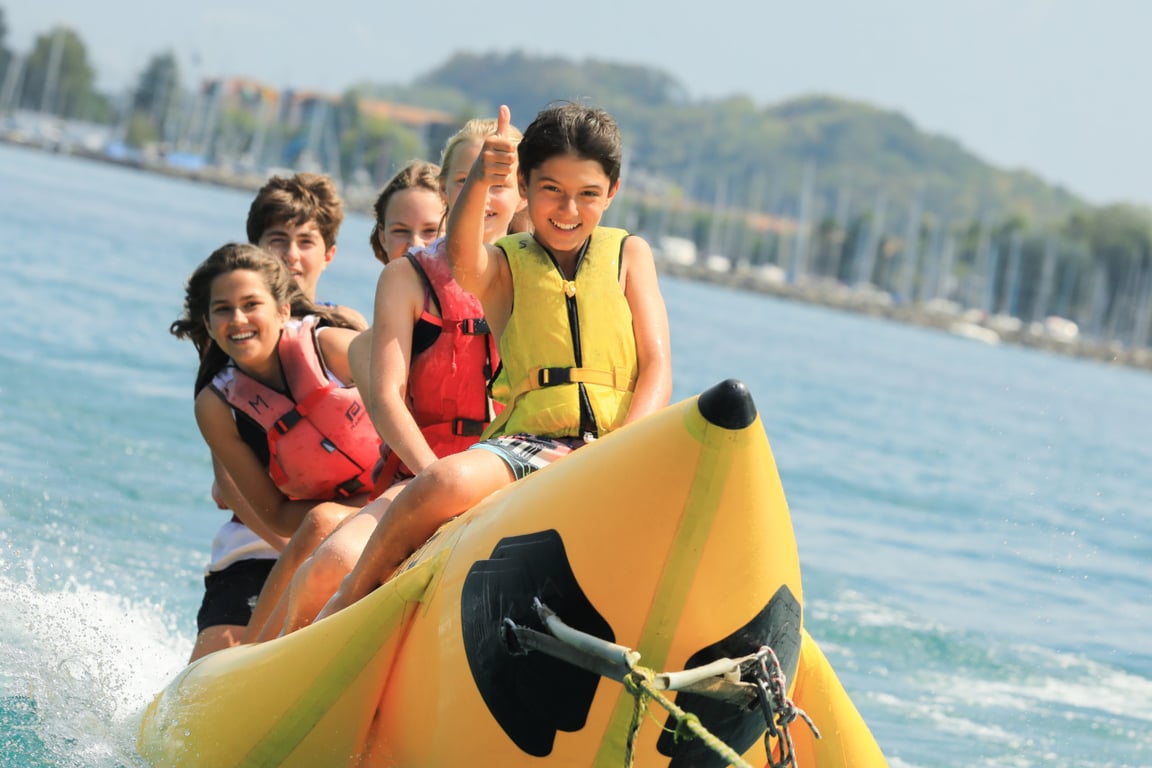
Aiglon and Beau Soleil are alpine neighbours in the Villars area but operate fundamentally different schooling models — Round Square expedition pedagogy versus Continental European elite tradition. Here's how they actually compare in 2026.
Once families have ruled out Le Rosey (perhaps because of its scale and price ceiling) and want to look more carefully at alpine character-tier Swiss boarding, the comparison that surfaces is Aiglon College versus Collège Alpin Beau Soleil. The two schools sit roughly 10 kilometres apart in the Villars-sur-Ollon area of Canton Vaud, at similar altitudes (Aiglon at Chesières-Villars 1,300m, Beau Soleil at Villars-sur-Ollon 1,250m), both fully boarding, both Round Square members, both IB World Schools, both serving global families at the CHF 130,000-200,000 all-in annual price point. From a thousand kilometres away they look interchangeable.
They are not. Aiglon was founded in 1949 by John Corlette, a British educator deeply influenced by Kurt Hahn (founder of Gordonstoun and Outward Bound). The school's identity is built around the Kurt Hahn 'mind, body, spirit' framework, four expedition cycles a year, and a multi-faith chapel programme that is central to school life. Beau Soleil was founded in 1910 in the Belle Époque era of European education, and its identity reflects that pedigree — more Continental European in cohort and tone, with a strong French-language tradition and the option of either the IB Diploma or the French Baccalauréat at sixth form. Same alpine valley, fundamentally different schools.
We advise families considering both schools every admissions cycle. Read top to bottom if you're early in the process. Skip to relevant sections if you're choosing between offers. The right answer hinges on whether your family fits the British-Round Square expedition tradition or the Continental European Belle Époque tradition — and on whether you want IB-only or want the French Bac as a parallel option.
The 60-second comparison
Aiglon College sits in Chesières-Villars at about 1,300m altitude, on a mountainside campus that integrates academic buildings, boarding houses, chapel and sports facilities. Founded in 1949 by John Corlette. About 400 students aged 9-18 from 50+ nationalities, all boarding (ages 9-13 in the Junior School, 13-18 in the Senior School). Curriculum is IB Diploma at sixth form, IGCSE underneath. The school is built around the Kurt Hahn 'mind, body, spirit' framework. Tuition + boarding for 2025-26 is in the CHF 130,000-155,000 range for Senior School depending on year; all-in costs (expedition kit, ski programme, weekend travel) typically push annual spend to CHF 160,000-185,000 (USD 175,000-205,000). Round Square founding member.
Collège Alpin Beau Soleil sits in Villars-sur-Ollon at about 1,250m altitude, on a campus integrating elegant historic buildings with modern academic and sports facilities. Founded in 1910 — one of the oldest co-educational Swiss boarding schools in continuous operation. About 300 students aged 11-18 from 40+ nationalities, all boarding. Curriculum is IB Diploma or French Baccalauréat at sixth form, with bilingual French-English instruction throughout. Verified 2026-27 fees: Boarding + Tuition CHF 137,040 (Grades 6-10), CHF 148,440 (Grades 11-12); other fees (medical insurance, expeditions, cultural activities) add roughly CHF 26,460; annual trip fees CHF 8,490 — bringing all-in to approximately CHF 175-185,000 (USD 192,000-205,000). Round Square member.
On paper similar — both alpine boarding, both IB, both around CHF 175-185k all-in, both 10km apart in the same Vaud valley. The lived experience and credential pathway are different.
Campus and culture: Chesières mountain campus vs Villars village campus
Aiglon's campus sits above Chesières on a mountainside with views down the Rhône valley. The school is split between the Junior School (younger boarders, ages 9-13) and the Senior School (ages 13-18), both within walking distance of each other. The campus is functional rather than ornate — built across the second half of the 20th century in a style that reflects the school's founding ethos (substance over surface). Pupils walk between academic buildings, boarding houses, chapel and the sports complex through alpine paths. Skiing is part of the regular winter schedule; the school has direct access to the Villars-Gryon ski domain.
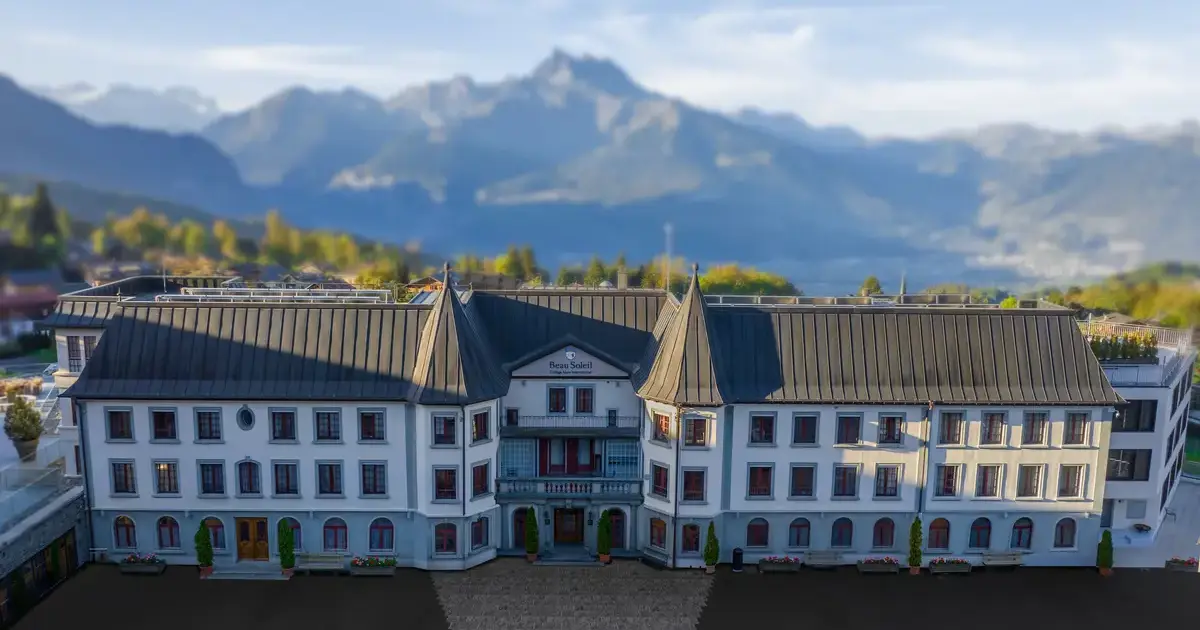
Beau Soleil's campus sits in the village of Villars-sur-Ollon itself, integrating with the resort village in a way Aiglon doesn't. The school's historic buildings (some dating to its 1910 foundation) sit alongside modern teaching and sports facilities. The campus aesthetic is more polished and elegant than Aiglon's — chalet-style architecture, formal gardens, sophisticated common rooms. The village itself is part of the school's social geography — pupils walk to the village for organised excursions, ski during the winter terms, and use the Villars cable car and tourist infrastructure as part of daily life. The atmosphere is closer to a small mountain resort hotel converted to a school than a traditional boarding campus.
A useful filter: Aiglon operates as a Kurt Hahn alpine school — functional, expedition-orientated, the mountain is the curriculum. Beau Soleil operates as a Belle Époque alpine establishment — polished, integrated with a working ski resort village, the mountain is the setting. Neither is better; they shape adolescents differently.
Pedagogy: Kurt Hahn 'mind, body, spirit' vs Continental European elite tradition
Aiglon's pedagogical DNA is Kurt Hahn. The founder John Corlette was a friend and disciple of Hahn (Gordonstoun, Outward Bound, Salem), and Aiglon was built explicitly to bring Hahn's pedagogy into a Swiss alpine setting. The four pillars — Mind (academic rigour), Body (sport, expedition, alpine skills), Spirit (meditation, chapel, character formation), and Service (community, civic engagement) — are not marketing; they are the operating system of the school. The four annual Expeditions are the most-cited example: every Junior and Senior School pupil joins a week-long mountain expedition each term, building in difficulty across the years. By Year 13 pupils are tackling significant high-altitude routes. Daily meditation (the school's term, not 'prayer') is built into the timetable.
Beau Soleil's pedagogical tradition is Continental European elite — a different lineage. The school was founded in the era when European nobility and upper-middle-class families sent children to Swiss boarding schools for finishing education that combined academic rigour with multilingualism, alpine skill, and social sophistication. The contemporary school has modernised this tradition while retaining its character: the academic programme is genuinely rigorous (IB Diploma + French Baccalauréat), the linguistic instruction is bilingual French-English from year 6 onwards, the cohort culture expects social grace and presentation alongside academic results. Expeditions exist but are not the central curricular pillar they are at Aiglon; weekly skiing in winter is the regular alpine engagement.
Practical filter: if your child responds to a structured character-and-expedition pedagogy and would benefit from regular wilderness immersion as part of school life, Aiglon's structure is purpose-built. If your child fits the Continental European elite school culture — multilingual, socially polished, academically rigorous without the expedition emphasis — Beau Soleil's tradition is the more aligned fit.
Curriculum: IB-only vs IB + French Baccalauréat
Aiglon runs IGCSE in the lower years and the IB Diploma at sixth form, with no parallel A-Level or French Baccalauréat option. The school's IB cohort is the academic centre of gravity at age 16-18, with strong Theory of Knowledge teaching, well-developed Extended Essay supervision, and a CAS programme that integrates naturally with the school's expedition and service culture. Aiglon's IB average score has historically been strong (around 36-38 depending on year), with most graduates progressing to UK, US, or top European universities.
Beau Soleil offers both the IB Diploma and the French Baccalauréat at sixth form, letting families choose the credential that fits their target universities. For French-target families (Sciences Po, HEC Paris, École Polytechnique, French-speaking Swiss universities), the French Baccalauréat option is structurally important — IB is widely accepted in France but the French Bac remains the standard pathway. For international/Anglosphere-target families, the IB Diploma is the choice. The IB cohort at Beau Soleil is smaller than Aiglon's by absolute numbers but the programme is well-established.
Practical filter: if your child is IB-pathway certain (UK, US, or international university targets), Aiglon's larger and more deeply-calibrated IB cohort gives a marginally richer IB experience. If your family wants the French Baccalauréat as a real option (especially for French-speaking families or those targeting French grandes écoles), Beau Soleil's dual-credential structure is purpose-built.
Cohort culture: Anglo-Round Square vs Continental European
Aiglon's cohort skews more Anglo-Round Square. Round Square is the global network founded by Kurt Hahn that includes Salem, Gordonstoun, Tabor Academy, Robert Land Academy, Geelong Grammar and many others — Aiglon was a founding member. The cohort culture reflects this Anglosphere/Hahn-network membership: many Aiglon families have multi-generational links to other Round Square schools, many pupils transfer between Round Square schools for exchange terms, and the social tone is more British/American/Australian than Continental European. The 50+ nationalities cohort is genuinely international but the cultural centre of gravity is the English-speaking Round Square world.
Beau Soleil's cohort skews more Continental European. The school's century-plus history serving European families (originally Belle Époque nobility, now a mix of European founders, finance principals, royalty, and senior executives) gives the social environment a different texture. French is widely spoken alongside English; the cohort includes significant French, Italian, Belgian, German, Swiss, and Spanish nationals alongside Middle Eastern, Asian, and Anglosphere families. Social presentation and multilingual sophistication are part of the cohort's lived reality in a way that's less central at Aiglon.
Practical filter: if your family has Round Square network connections or feels more comfortable in an Anglosphere-oriented international cohort, Aiglon fits more naturally. If your family is Continental European, multilingual, or values the polished social environment that comes with Beau Soleil's tradition, that fit is more aligned.
Boarding life: 9-18 vs 11-18
Aiglon admits boarders from age 9 (the Junior School) through age 18 (Senior School). The Junior School (ages 9-13) operates as a distinct cohort within the same campus, with its own boarding houses, younger pastoral structures, and an academic programme that feeds into the Senior School. Families who want their child boarding from age 9 with the option of staying through to age 18 in the same alpine environment find this structurally unusual — most Swiss boarding schools start at age 11 or 13. Aiglon's Junior School is small (about 80-100 pupils) and creates a tight pastoral environment for younger boarders.
Beau Soleil admits boarders from age 11 to age 18, without an under-11 Junior School. The school's structure is therefore a single cohort progressing from middle-school years through to the Diploma/Bac years. For families whose child is age 11-13, both schools work; for families whose child is age 9-10, Aiglon's Junior School is the meaningful difference. Beau Soleil's 11-18 structure means the youngest pupils enter at age 11 alongside older cohorts already established in the school's culture.
Practical filter: if you're considering boarding from age 9 or 10, Aiglon's Junior School solves that. If you're considering age 11 onwards, both schools work equivalently from a structural standpoint.
Cost and financial aid
Both schools cluster in the same all-in cost band for international families. Aiglon's published 2025-26 tuition + boarding ranges from CHF 130,000 for Junior School to CHF 155,000 for Senior School depending on year. Add CHF 8,000-15,000 for expedition kit, ski programme charges, and the activity calendar; CHF 6,000-12,000 for travel home for Türkiye-based families; CHF 3,000-5,000 for personal spending. All-in typically lands at CHF 160,000-185,000 (USD 175,000-205,000) per year.
Beau Soleil's verified 2026-27 fees: Boarding + Tuition CHF 137,040 (Grades 6-10), CHF 148,440 (Grades 11-12). Other published fees: medical insurance, expeditions, cultural activities CHF 26,460. Annual trip fees CHF 8,490. Add roughly CHF 6,000-12,000 for travel home and CHF 3,000-5,000 for personal spending. All-in typically lands at CHF 175,000-185,000 (USD 192,000-205,000) per year — slightly higher overall than Aiglon at sixth form but very close.
Both schools' financial aid is limited compared to UK boarding peers. Aiglon's Aiglon Foundation provides means-tested bursaries and a small number of scholarships; awards typically cover 25-50% of fees for high-need families. Beau Soleil offers a small number of scholarships (academic, music, sport, all-rounder) with awards typically 10-25% of fees. Neither school has the bursary scale of an Eton or Andover; Swiss boarding is structurally a full-fee-paying environment for most families.
Admissions: what each school weights
Both schools use rolling admissions throughout the year, with prime entry points at age 11 (Junior School at Aiglon / Year 7 at Beau Soleil), age 13 (Year 9 entry — IB-aligned at both), and age 16 (sixth form Year 12 / DP1 entry). The published timeline is 'apply 6-18 months before entry'; the operational reality at both schools is that prime intake years can fill 12-18 months out and the only way to know real availability is to call admissions directly.
Aiglon's admissions process includes a school visit (strongly encouraged), an academic assessment in mathematics and English, a family interview, and a written application explaining the family's interest in the Kurt Hahn-Round Square pedagogy. The school looks for families who genuinely fit the expedition-character-spirit model — not just families attracted to the price point. The interview surfaces this fit explicitly.
Beau Soleil's admissions process is similar in structure (visit, assessment, interview) but the cultural fit it looks for is different. The school looks for families who fit the Continental European elite tradition — multilingual, socially polished, academically rigorous, comfortable with the resort-village campus integration. The interview process surfaces social fit alongside academic capability.
Practical timing: register early (12-18 months minimum) for both schools at any prime entry year. Sixth-form/DP1 entry (age 16) is the second prime entry and typically easier than Year 9 at both schools for September 2026 and 2027 entries.
University placement
Both schools place graduates consistently to top UK, US, European, and international universities. Aiglon's published destinations include Oxford, Cambridge, Imperial, LSE, UCL, Edinburgh, Durham, the Ivy League, MIT, Stanford, and the major European universities; the Round Square network gives additional access to selective universities in Australia, Canada, and globally. Aiglon's expedition + service + character profile particularly resonates in US selective university applications.
Beau Soleil's published destinations span a similar range — Oxford, Cambridge, Imperial, LSE, UCL, Edinburgh, the Ivy League, MIT, Stanford — with an additional emphasis on French-target universities (Sciences Po, HEC Paris, ESCP, INSEAD undergraduate) reflecting the French Bac cohort. For families targeting French-speaking universities specifically, Beau Soleil's pipeline is meaningfully stronger than Aiglon's.
Both schools have well-resourced university counselling offices with deep international experience. Either school's counselling team will work effectively with a Türkiye-based family across UK, US, European, and international university applications. The marginal differentiator is Beau Soleil's French-pathway depth versus Aiglon's Round Square-network breadth.
Day-to-day: expedition cadence vs ski resort rhythm
Aiglon's daily rhythm has the expedition cycle built in. Each term includes one expedition week (week-long alpine treks for every age cohort, building in difficulty); the period before and after expedition shapes the rest of the term. Outside expedition weeks, the daily rhythm includes morning chapel/meditation, classes, afternoon sport (skiing in winter, running/climbing/team sport in other seasons), evening preparation, and house life. Weekends include house events, sport fixtures, and occasional supervised trips into Villars village or further afield (Geneva, Lausanne for older pupils).
Beau Soleil's daily rhythm has the ski resort built in. The school is integrated with the Villars-sur-Ollon village; daily life involves moving between school buildings and the village. Winter skiing is regular (most pupils ski 2-3 times per week during the winter term); summer engagement includes hiking, mountain biking, climbing, and outdoor sport. Cultural programming is sophisticated — guest speakers, classical music performances, theatre productions — reflecting the school's Continental European tradition. Weekends include organised excursions to Geneva, Montreux, or further afield.
Practical filter: Aiglon shapes adolescents with strong wilderness skills, an inner discipline calibrated to expedition demands, and a tight character-and-service identity. Beau Soleil shapes adolescents with strong alpine sport competence, polished social presence, and the multilingual sophistication of Continental European elite tradition.
Who Aiglon is the right call for
We typically recommend Aiglon when the family values the Kurt Hahn 'mind, body, spirit' pedagogy and wants expedition and character formation as integral to the schooling experience, when the child is between ages 9-13 and the family wants Junior School boarding with seamless progression to Senior School, when the family has Round Square network connections or affinity, and when the IB Diploma is the clear credential target. Strong fit for families targeting US selective universities (the Aiglon character profile resonates in US application essays), for families who want their child to develop genuine wilderness skill alongside academic rigour, and for adolescents who thrive in structured character-development environments.
Less of a fit for families who want the Continental European elite social environment, who specifically want the French Baccalauréat option, or who don't want expedition pedagogy as a defining experience. Aiglon's structure is best for families who genuinely fit the Kurt Hahn model; families attracted only by the Swiss alpine setting without the pedagogical commitment may under-experience the school.
Who Beau Soleil is the right call for
We recommend Beau Soleil when the family fits the Continental European elite tradition — multilingual, socially polished, academically rigorous without the expedition emphasis. Strong fit for French-speaking families or families targeting French-speaking universities (where the French Bac pipeline matters), for families valuing the resort-village campus integration, and for families who want the polished aesthetic and sophisticated cultural programming that comes with the school's century-plus tradition. Beau Soleil works particularly well for families whose child is 11+ and would benefit from a refined boarding environment with strong alpine sport.
Less of a fit for families with a child age 9-10 who want immediate boarding (Aiglon's Junior School solves that), for families who want the Kurt Hahn expedition pedagogy, or for IB-only-focused families who would prefer Aiglon's more deeply-calibrated single-credential cohort. Beau Soleil's strength is its specific tradition; families who don't value the Continental European elite framing may find the social environment less aligned.
The advisor's take
Both schools are exceptional Swiss alpine boarding options at a similar all-in price point. The mistake families make is treating them as interchangeable Villars-area schools — they aren't. If we had to compress our advice into one sentence: choose Aiglon if you want your child in the Kurt Hahn-Round Square expedition tradition with IB-only pathway and the option to board from age 9; choose Beau Soleil if you want your child in the Continental European elite tradition with French Bac as a real option alongside IB and a polished resort-village setting.
If neither captures it, the wider Swiss boarding landscape — Le Rosey (lakeside elite tier, the largest fee point), Brillantmont (Lausanne lakeside, more British-curriculum), TASIS Switzerland (American Diploma + IB, Lugano), Leysin American School (American Diploma + AP, Leysin) — solves different problems. Our Swiss Boarding Deep Dive 2026 walks through the broader landscape. The 30-minute advisor call with Kevin (London-based, handles UK + Switzerland boarding placements) is the right next step if you want current intel on Year 9 and DP1 availability at any of these schools for September 2026 and 2027 entry.
Frequently asked questions
- Aiglon or Beau Soleil — which is more academic?
- Both schools are academically rigorous at top-tier Swiss boarding standards. Aiglon's IB cohort is slightly larger and more deeply-calibrated (recent IB averages around 36-38). Beau Soleil's dual IB + French Baccalauréat structure means academic offerings are split, but each credential is genuinely well-supported. Neither school is more 'academic' than the other in any meaningful sense; they're academically equivalent with different curricular optionality.
- Does Aiglon really run four Expeditions per year?
- Yes — Aiglon's Expedition programme is structurally central to the school. Every pupil from age 9 (Junior School) through age 18 (Senior School) participates in expedition cycles each term, building in difficulty across the years. By Year 13, pupils are tackling significant high-altitude routes. This is the most-cited distinctive element of Aiglon's pedagogy and is genuinely a defining experience for graduates.
- Can my child do the French Baccalauréat at either school?
- Only at Beau Soleil. Aiglon offers IB Diploma at sixth form with no French Baccalauréat option. Beau Soleil offers both IB Diploma and French Baccalauréat at sixth form, letting families pick the credential that fits their target universities. For families targeting French-speaking universities (Sciences Po, HEC, École Polytechnique), Beau Soleil's French Bac pathway is structurally important.
- What's the age range at each school?
- Aiglon admits boarders from age 9 (Junior School) through age 18 (Senior School). Beau Soleil admits boarders from age 11 through age 18, without a separate Junior School. For families considering boarding from age 9-10, Aiglon's structure is meaningfully different; from age 11+, both schools work.
- How do the fees actually compare?
- Both schools cluster in the CHF 175,000-200,000 all-in annual range for international families. Aiglon's tuition + boarding ranges roughly CHF 130-155k (depending on year) plus expedition kit, ski programme, and ancillaries pushing all-in to ~CHF 160-185k. Beau Soleil's verified fees: CHF 137,040 (Grades 6-10) or CHF 148,440 (Grades 11-12) for boarding + tuition, plus ~CHF 26,460 for activities and CHF 8,490 for trip fees — all-in ~CHF 175-185k (USD 192-205k).
- Are both schools really 10km apart?
- Yes — both schools are in the Villars-sur-Ollon area of Canton Vaud, Switzerland. Aiglon sits in Chesières-Villars at 1,300m altitude; Beau Soleil sits in Villars-sur-Ollon village at 1,250m altitude. The two schools are direct alpine neighbours, sharing the same Villars-Gryon ski domain for winter sport. Despite the geographic proximity, the schooling experience differs materially.
- Which school is better for US universities?
- Both schools place graduates consistently to US Ivies, MIT, Stanford and the broader top-tier US selective universities. Aiglon's expedition + service + character profile particularly resonates in US application essays — admissions officers value the Round Square pedagogical narrative. Beau Soleil's path to US universities is also strong but operates through a different framing (Continental European cohort, multilingual sophistication). For US-target families, both work; Aiglon has a marginal pedagogical-narrative advantage.
- What's the cohort make-up at each school?
- Aiglon: about 400 students from 50+ nationalities, all boarding, with a cohort that skews more Anglo-Round Square (significant British, American, Australian, Canadian, plus a strong international Middle Eastern, Asian, African mix). Beau Soleil: about 300 students from 40+ nationalities, all boarding, with a cohort that skews more Continental European (significant French, Italian, Belgian, German, Swiss, plus Middle Eastern, Russian/CIS, Asian, and Anglosphere mix).
See how this article maps to your child's profile.
Run our 5-step AI Match — we'll factor in the trade-offs covered above.
Start AI MatchTalk to a senior education advisor.
AI helps you shortlist. Our advisors help your family decide — with a decade of admissions experience across UK, Switzerland, North America and Asia.